Home Sales On the Up and Up
Existing-home sales nationally rose in October for the second
straight month, surging ahead of 2013 sales for the first month this
year, according to the National Association of Realtors®. Midwest sales
are 2.5% higher than last year, reaching their fastest annual pace
since September 2013. Home buyers have been encouraged to enter the
market due to the continued low interest rates, rising levels of
inventory, and strength in the job sector.
2015: The Year of the First-Time Home Buyer
First-time home buyers have been at low levels in the past 30 years.
Some factors that have contributed to low levels have been prospective
buyers having student loan debt and struggling to find the right home
amidst low inventory. However, with stronger employment, increased
salary wages, increased inventory and continuing low mortgage rates, an
article from the National Association of Realtors® suggest that 2015
could be the year that the number of first-time home buyers increases.
KoenigRubloff Cares Foundation Announces $40K Grants for 2014
The KoenigRubloff Cares Foundation has announced plans to grant
$20,000 to the Sunshine Kids, a non-profit organization dedicated to
children with cancer, and $20,000 to Chicagoland Habitat for Humanity, a
non-profit organization that helps people to work towards affordable
homeownership. This sets a new record for us. We are grateful for the
opportunity to support these organizations, and appreciate the
generosity of agents and employees.
good to know
Keeping Your Green Thumb During Winter
The cold weather and winter season can cause some avid gardeners to
miss seeing their plants and vibrant perennials blooming. However, house
plants are a terrific reminder that gardening skills can be maintained
through growing beautiful greenery indoors! HGTV.com shares their top
eight keys to success when growing houseplants including tips on
lighting and water intake plants should receive. To read the full list,
please click here.
Ways to Be Prepared for a Winter Wonderland
While there are measures to take in protecting your home from the
inside during winter, there are also many steps you can take outdoors
too! Centers for Disease and Control give a number of tips such as home
materials you can spread on icy patches aside from salt, how to prepare
your car for harsh winter conditions, and how to be fully equipped for a
possible emergency! To read all of the tips, please click here.
Buying and selling residential real estate is one of the most emotional
transactions consumers conduct. Understanding client psychology,
managing expectations, and using effective communication are the three
most valuable skills that a real estate professional needs to develop
for a successful career with less stress.
Client Psychology
Understand the psyche of your client and your chances of a smooth transaction increase dramatically.
Is the client a standard seller who has lived and raised their family
in the home for the past 25 years, but has not done many upgrades?
Perhaps prepping this client for the possibility of offensive offers
from cash investors will be important to making sure they don’t take
things personally, or worse, become unreasonable sellers.
Understanding client psychology is important, however, equally
important is they understand your psychology. It is vital to the client
relationship that they understand your goals are in-line with theirs,
and as a fiduciary you will only represent their best interests.
Breaking down the walls in the beginning is one of the best ways to get
on the same page as your client.
Managing Expectations
Here are two examples of how to manage expectations with buyers and sellers.
Home inspection. If
the buyer thinks a seller is going to update a 1920 home to the current
building code, this is usually a bad sign. The expectation should be
set before the report is issued of what will be outlined and items that
should reasonably be expected to be addressed. A buyer can always ask
for everything and a seller can give nothing, but by setting the
expectations upfront you will help clients get more without losing it
all.
Setting price with sellers.
There is no easier way to upset a seller than continually ask for price
reductions. Go through the pain once in the beginning, set the price
right, and sell the home. Otherwise you will continually have to explain
why the price needs to be reduced. Set the expectation and get the job
done right, the first time.
Communication
This will be short and sweet:
Call, e-mail, text, or Facebook your clients with updates and
information before they call you. Third-party vendors should do the same
(lenders especially, escrow, title, etc.).
Bad news early is good news. Do not delay making these calls.
Understanding the client, managing expectations, and communication are key to keeping clients happy and your success high. By Sammer Mudawar
CHICAGOLUXURYREALTY.COM and STPETELUXURYREALTY.COM November 2014
MARKET UPDATE
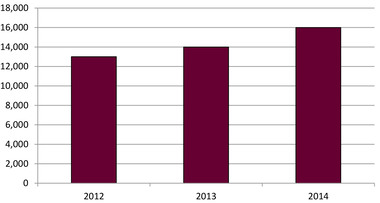
3000 More Homes for Sale in September A
flurry of autumn listings has hit the market in the Chicago area,
signaling optimism in the real estate market. Chicago Tribune reports
that 16,000 houses, townhouses and condominiums were available for sale
in the Chicago area in September, which is 2,000 more than in September
2013 and 3,000 more in September 2012 according to Midwest Real Estate
Data.
Home Equity Soars: Now Above 2009 Levels
Home equity lines of credit have increased 20 percent in comparison
to a year ago and are at the highest levels since June 2009 according
RealtyTrac’s Home Equity Line of Credit Trends Report. Nearly 19 percent
of all home owners have regained at least 50 percent equity in their
homes and the percentage of home owners with severe negative equity has
fallen from 29 percent in 2012 to 17 percent. Nationwide, 49 out of 50
metro areas posted year-over-year increases for the year ending June
2014.
A Healthier and Faster Real Estate Market The
number of distressed properties locally and market times of listings
both continue to drop. Prices also continue to rise at a more moderately
paced rate. As mortgage rates maintain levels at a historical low, and
local unemployment levels decrease, momentum in the real estate
marketplace is growing in the fourth quarter of 2014.
Good to Know
Energy Saving Tips for your Home
As temperatures cool in the fall and winter months, energy.gov has
compiled a list of helpful tips to save energy within your home, and the
tips are inexpensive too! Some of these helpful hints include covering
drafty windows, adjusting the temperature within your home
appropriately, and finding and sealing air leaks. To find out further
details about these tips as well as other ways to conserve energy,
please click here.
Seasonal Table Settings for Thanksgiving
Hosting a meal at your house for Thanksgiving this year? HGTV.com
offers fun entertainment ideas without the frills, with everything from a
hot apple cider drink to turkey garnishes. To see HGTV’s suggestions,
please click here.
Check out the newest game in town.Berkshire Hathaway..The world's most trusted brand!
Opening up the new Beach Drive office in beautiful downtown ST. Pete! Picture yourself
collecting shells on Trip Advisor's BEST Beaches then coming to your
affordable lifestyle or 2nd home in Tropical St. Pete to Sarasota Carpe Diem..For the Ongoing Collection of LIFE! stpeteluxuryrealty.com
See for Yourself
US Housing Market Outlook for FALL 2014 #chicagoluxuryrealty #stpeteluxuryrealty
http://blog.koenigrubloff.com/2014/08/22/u-s-housing-market-outlook-for-fall-2014/
Lincoln Park is atop the city's 77 neighborhoods in average listing price, at $1,010,633 for the week ending Sept. 17. View Full Caption
Conlon Real Estate and VHT
LINCOLN PARK — Property values rise and fall over time,
but one thing remains constant in Chicago: toney Lincoln Park remains
one of the most desirable, and pricey, neighborhoods in the city.
All
homes for sale aren't listed but of those in Lincoln Park that are, the
average is above $1 million, according to the latest Trulia Heat Map.
Real estate in Lincoln Park, like many other places in the city, is a mixed story.
Lincoln
Park is atop the city's 77 neighborhoods in average listing price, at
$1,010,633 for the week ending Sept. 17. But that's down 3.4 percent
from this summer. Its $570,000 average sale price is up 9.2 percent year
to year. The median sale price — the midway point for all homes sold —
in Lincoln Park was $340,000, down 11.8 percent from a year ago. The
latter figure, experts say, reflects stronger sales with less expensive
properties.
Overall, though, Lincoln Park's housing stock of
luxury homes is mirroring a generally healthy national trend of
higher-priced properties selling better.
"Lincoln Park and Old
Town, in my opinion, have a more residential feel," said Berkshire
Hathaway Realtor Ron Goldstein, who specializes in the high-end market.
That's especially true compared to the Gold Coast, he added. "There are
more condos in the Lincoln Park and Old Town area than there are in the
Gold Coast area."
Overall, the city's realty market is rebounding
from the recession of six years ago, though its recovery is lagging
behind other cities — and there are some estimates that we won't see
2007 property values again for another decade or more.
Zillow Inc.
says Chicago lags behind New York City and especially Los Angeles in
the recovery. Zillow estimated that L.A. property values would recoup
their recession losses next year, with New York City following suit in
2019.
Zillow predicts Chicago real-estate prices won't peak again
until 2026. By one estimate values are still 24.4 percent below their
peak in March 2007.
Still, the realty data service CoreLogic found last year
that housing prices rose in all of the 235 Chicago-area ZIP codes for
the first time in seven years. And, according to Zillow, Chicago property values rose 8.8 percent over the last 12 months, above the national average of 6.3 percent.
They're
predicted to rise again over the next 12 months, but at a slower rate
of 2.6 percent, while nationwide home prices rise by 4.2 percent.
"Prices
are going to continue to go up, but the pace has been easing back,"
said David Blitzer, who runs statistics for the Standard & Poor's
Dow Jones Indices, one of the leading databases for the realty market.
"And that's true in almost all the cities. We've seen the same sort of
gradual loss of momentum."
Blitzer said "the bigger you were, the harder you fell."
"Denver
and Dallas are already back or possibly a little above their peak
before the financial crisis. They didn't go down quite as much. They
didn't have the huge rise and huge collapse," he said.
The
real-estate bubble was biggest, Blitzer said, in Phoenix, Las Vegas,
Miami and Tampa, Fla. "Those four cities had the biggest run-up and the
biggest collapse."
Goldstein, who specializes in luxury business
in Chicago and Miami, said Chicago "never saw the appreciation other
major cities did."
Goldstein remains bullish on the local
real-estate market. "Things are absolutely looking up," he said. "I'm
busier than I've ever been."
Lincoln Park is one of the areas that
has bounced back the fastest, he added, and saw minimal declines.
"Especially if you're talking the luxury market, not at all," Goldstein
said. "The luxury market has a huge uptick we've seen in the last five
years" while other city neighborhoods were still bottoming out.
Still,
while other neighborhoods have fluctuated, Lincoln Park has remained
relatively stable over the years and the decades. "It has been, always,"
Goldstein said. "It's close to the lake," the city's greatest natural
resource, and the lake isn't going anywhere. The shopping along Clark
Street is a natural draw as well.
The Trulia heat map showing values by Chicago neighborhoods indicates home prices generally up, but with much variation.
"It
just depends on the property and the location," Goldstein said.
"There's no rhyme or reason with what's happening with real estate right
now."
Other neighborhoods go through hot and cold phases, he added, but Lincoln Park remains relatively steady.
"Humboldt
Park is hot right now," Goldstein said, following the rise in nearby
Logan Square, which has driven some buyers seeking better deals to look
to the south and west.
The so-called Great Recession and its associated foreclosures continues to have a lingering impact.
A study of the Chicago market from 2008 to 2012
conducted by the Regional Economic Applications Laboratory at the
University of Illinois at Urbana-Champaign found that a single
foreclosure within a tenth of a mile can drop property values more than
$3,000. Three to five foreclosures in the same area can cut values more
than $5,500, and those cuts are exponential if six to 10 or more than 10
foreclosures hit an immediate area, dropping values more than $7,000 or
even $9,000.
According to Goldstein, the city is just beginning
to finish off that foreclosure backlog. The process has taken longer in
states where foreclosures go through the courts, like Illinois, rather
than going through a more expeditious administrative process.
Many
sellers are still waiting to put their properties on the market,
Goldstein said, "and they need to be educated, though, that prices are
increasing."
According to Zillow, 18.8 percent of all homes
nationwide are "under water," with equity values less than what's owed
on them. In Chicago, however, that figure is 32.9 percent through March.
That
creates a double bind, with many homeowners determined to wait out the
market to get their value back, thus depleting the inventory of
available homes. Many realtors complain right now about the lack of
inventory, to the point where they say there's never been a better time
to post a good property at a fair price for a quick sale.
Real
estate speculators have helped boost properties in some citiies, such as
Las Vegas, but Chicago hasn't seen that same sort of aggressive
speculation, Goldstein said.
However, he has seen a noticeable impact brought on by the influx of tech firms and their employees who Mayor Rahm Emanuel has been courting since he took office. Lincoln Park and the Near North Side have benefited, he said.
If
Chicago hasn't enjoyed the same bounce-back as some other cities in
home prices, the commercial market for investors is said to remain
relatively bullish, according to a recent article in Crain's Chicago Business.
One drag on the bounce-back, according to the University of Illinois at Chicago study "The Great Recession's Impact on the City of Chicago,"
is the state's dependence on property taxes to fund essential public
services like education. That study specifically blames Mayor Richard M.
Daley's "broader policy agenda that focuses on public safety,
neighborhood investment and avoiding property-tax increases" over the 22
years before Emanuel took office.
"That's more of an indirect effect," said UIC Professor Rebecca Hendrick, lead author of the study.
That
study cites Daley's privatization lease agreements on parking meters
and the Skyway, with the money going to fill budget deficits during the
recession and defray increases in the property taxes. More recently, the
Board of Education has authorized maximum increases in its tax levy, and Emanuel has warned of what he's called a "$600 million pension cliff," again resulting from pension payments put off under the Daley administration.
While Emanuel has thus far held the line on city-instigated property-tax increases, most recently through a hike in telephone surcharges,
many worry that making up the pension shortfall Daley created will mean
increases in the property tax in years to come, a concern for both
homeowners and renters, but also anyone considering buying a home in
Chicago.
"If you don't know what the state and local governments
are going to do next, that has a chilling effect on a buyer's appetite,"
said Laurence Msall, president of the Civic Federation, a
business-oriented government watchdog.
"Without a doubt, the worst
economic-development climate is one of uncertainty. People don't know
what the return on any investment is going to be. The state continues to
lurch from one fiscal crisis to the next," he added. "It has a residual
and corrosive effect on the City of Chicago and Cook County."
The Civic Federation just put out a study of property values across the city and county.
It showed that overall Chicago property values had continued to decline
in the 2012 tax year to levels of a decade before. Yet, because tax
levies continues to rise, homeowners might actually see their tax bills
rise even as their assessed value declines, which threatens to create a
spiral of diminishing value.
"Increasing property taxes affect the value of a property," Msall said, and not in a good way.
Yet
Hendrick said the property-tax burden is actually relatively light in
Chicago, which can raise revenues in other ways, as in the case of the
increased phone surcharge for emergency 911 services.
"The other
thing no one has really been able to tackle is the impact that the State
of Illinois is having on all of this," Hendrick added. She said it was a
common topic of conversation with her academic colleagues from outside
the state. "They're all aware of how bad off financially the State of
Illinois is, and that certainly has to be having a confounding effect on
the City of Chicago.
"Chicago is the primary economic engine for
the State of Illinois," she said. "How many people are not moving here,
how many people are not getting jobs here or not taking jobs because
they're probably more aware of the problems with the State of Illinois?"
Standard
and Poor's Blitzer said state problems have a minimal impact because
Chicago is the economic engine that runs the state, not vice versa.
"My
sense is when people look at at that, as far as the value of housing,
first they're concerned about schools and local services no matter what.
... And then to some extent they're concerned about their property
taxes, but they probably look more at the local community than the
statewide finances," Blitzer said.
Yet that's hardly good news for
Chicago, given the continuing grief over Chicago Public Schools and the
murder rate and, yes, the possibility of hikes in property taxes, all
of which Blitzer said "absolutely" affect home values.
"Schools
are always gonna be a drive," Goldstein said. Yet the good news for
neighborhoods like Lincoln Park, from where he stands, is that all this
turbulence has a minimal impact on the luxury market, where he estimated
eight out of 10 families send their children to top-level private
schools "just because they can," he added.
"We're fortunate to
have good schools in Chicago on the luxury side," Goldstein said. Many
in Lincoln Park send their children to top-rated local private schools
like Francis Parker, 330 W. Webster Ave., and the Latin School of
Chicago, 59 W. North Blvd.
Even so, Goldstein added, the local
public schools tend to be "good, very good," thanks to contributions the
area's well-to-do residents to to make to the schools and the interest
they show in improving them.
Meanwhile, areas like Humboldt Park continue to rise in spite of Chicago's drawbacks, espcially among younger couples.
"People
are going west," Goldstein said. "They'll be there, they'll buy their
place, because they can afford it in the $100,000-$200,000 range, and
then five years from now they'll move to the suburbs and a better school
system. That happens a lot."